Best Fertilizers for a Healthy Lawn Organic vs Synthetic and How to Choose the Right One
A lawn can look tired for a dozen reasons, but poor feeding is one of the most common. Pale grass, thin patches, slow recovery after mowing, and moss creeping into weak areas often point to the same issue: the turf is not getting the nutrients it needs, when it needs them.
Fertiliser is not a magic fix. It cannot correct compacted soil, deep shade, poor drainage, or blunt mower blades on its own. But the right product, used at the right time, can help grass grow thicker, greener, and more resilient. The key is knowing whether an organic or synthetic fertiliser suits your lawn, and how to match it to your grass type, soil, and season.

What lawn fertiliser actually does
Grass needs a mix of nutrients, but three matter most on fertiliser labels: nitrogen, phosphorus, and potassium. These are usually shown as an NPK ratio, such as `10-5-5` or `20-0-10`.
Nitrogen supports leaf growth and colour. This is the nutrient most linked with a rich green lawn. Too much can cause soft, fast growth that needs constant mowing and may be more prone to stress.
Phosphorus supports root development. It is most useful when establishing new lawns, overseeding, or repairing bare patches. Many mature lawns do not need much extra phosphorus unless a soil test shows a shortage.
Potassium helps grass handle stress. It supports drought tolerance, cold resistance, and general plant strength. Autumn lawn feeds often contain more potassium and less nitrogen for this reason.
Good lawn fertilisers may also include iron, magnesium, calcium, sulphur, seaweed extract, or beneficial organic matter. Iron can deepen colour and help suppress moss, though it is not a replacement for dealing with shade, compaction, or drainage.
The best result comes from feeding the soil and the grass together. A lawn on healthy, open, living soil will use nutrients better than a lawn growing in compacted, waterlogged, or depleted ground.
Organic and synthetic fertilisers work in different ways
Organic and synthetic fertilisers can both produce excellent lawns. The difference is not simply “natural good, chemical bad”. They feed turf in different ways and suit different goals.
Organic fertilisers are made from plant, animal, or mineral sources. Common examples include composted manure, seaweed meal, fish-based products, bone meal, feather meal, and lawn feeds made from processed organic materials. They usually release nutrients slowly as soil microbes break them down.
Synthetic fertilisers are manufactured to provide nutrients in precise, soluble forms. They can act quickly and are often designed for specific seasons or results, such as spring greening, summer maintenance, or autumn strengthening.
Fertiliser type | Main strengths | Things to watch |
Organic | Improves soil structure over time, supports microbial life, lower risk of scorching when used correctly | Slower results, nutrient levels can be less precise, may need warmer soil to work well |
Synthetic | Fast greening, accurate NPK ratios, easy to match to seasonal needs | Higher risk of over-application, can leach if misused, does less to build soil health |
Blended products | Combine fast action with some slow-release feeding, useful for many domestic lawns | Quality varies, still needs careful application |
Organic feeds are well suited to lawns where long-term soil health is the priority. They are a strong choice for gardens with children, pets, wildlife planting, or a low-input maintenance style, provided the product label confirms when the lawn can be used again after application.
Synthetic feeds are useful when the grass needs a quick and predictable lift. If a lawn looks pale in spring or needs steady growth after renovation, a well-chosen synthetic or controlled-release fertiliser can work very well.
Environmental impact depends on both the product and the way it is used. Overfeeding, spreading before heavy rain, or letting granules wash onto paths and drains can cause problems with any fertiliser. The most responsible option is the one applied accurately, at the right rate, and only when the lawn can use it.

How to choose the right fertiliser for your lawn
The best fertiliser is the one that matches the lawn’s real condition. Before buying a bag or bottle, look at the grass, the soil, and the time of year.
Start with the grass type and use
Most lawns in the UK contain cool-season grasses such as perennial ryegrass, fescues, and bentgrasses. These grasses grow strongly in spring and autumn, slow down in summer heat or drought, and may pause during cold winter weather.
A family lawn with ryegrass can usually handle a higher-nitrogen feed in spring because it is vigorous and recovers well from wear. A fine ornamental lawn with fescues and bents often benefits from lighter, more measured feeding. Too much nitrogen can make fine turf coarse, soft, and more prone to thatch.
Think about use as well:
High-traffic lawns
Choose a balanced spring and summer fertiliser that supports recovery and density. Potassium is useful for strength.
Shaded lawns
Use a lighter feed and avoid forcing lush growth. Shade-tolerant grass seed, aeration, and pruning nearby plants may matter more than fertiliser.
New lawns
Use a starter fertiliser with phosphorus if needed, especially when seeding or laying turf. Check your soil first where possible.
Lawns with moss
Feeding can thicken grass, but moss often signals shade, wet soil, low fertility, poor air flow, or compaction. Iron-based products can help, but the cause needs fixing.
Check the soil before feeding heavily
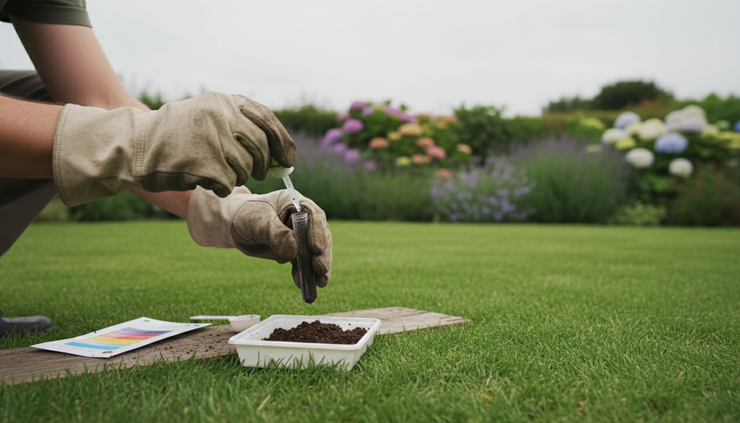
A simple soil test is one of the best lawn care investments. It can show pH and nutrient levels, helping avoid guesswork.
Most lawn grasses prefer a slightly acidic to neutral soil. If the pH is far outside the ideal range, grass may struggle to take up nutrients even when fertiliser is present. For example, acidic soil can encourage moss in some situations, while very alkaline soil can affect nutrient availability.
Look at soil texture too. Sandy soil drains quickly and may lose nutrients faster, so slow-release feeding can help. Clay soil holds nutrients better, but it may compact and stay wet, which limits root growth. In that case, aeration and top dressing may improve results more than extra fertiliser.
A quick garden check can tell you a lot:
If water sits on the surface after rain, drainage and compaction may be limiting growth.
If grass tears rather than cuts, blunt mower blades may be stressing the lawn.
If the lawn greens briefly after feeding then fades fast, the soil may lack organic matter or moisture.
If weeds dominate, the grass may be too thin to compete.
Match the NPK ratio to the season
Different seasons call for different nutrient balances. A spring feed is not the same as an autumn feed.
Season | What the lawn needs | Fertiliser approach |
Spring | Recovery, fresh growth, stronger colour | Moderate nitrogen with balanced nutrients |
Early summer | Steady growth and wear tolerance | Slow-release nitrogen and potassium |
Late summer | Recovery after heat or drought | Light feeding only when rain returns and grass is growing |
Autumn | Root strength and winter resilience | Lower nitrogen, higher potassium |
Winter | Rest, minimal growth | Usually no fertiliser needed |
Avoid high-nitrogen feeds late in the year. They can push soft growth that does not cope well with cold, damp weather.
How to apply lawn fertiliser without causing damage
Even a good fertiliser can harm grass if applied badly. Scorching, stripes, patchy colour, and wasted product usually come from uneven spreading or feeding at the wrong time.
Read the label first. It will state the rate, safe timing, watering advice, and any restrictions for pets or children. Do not guess by handfuls.
For granular fertiliser, use a spreader where possible. A broadcast spreader suits larger lawns, while a drop spreader gives more control on smaller or narrow areas. Apply half the recommended amount in one direction, then the other half at a right angle. This helps avoid stripes.
For liquid fertiliser, use the correct dilution and apply evenly with a watering can, hose-end applicator, or sprayer. Do not overlap heavily at turns.
Good application habits make a real difference:
Mow a few days before feeding, not immediately before if the lawn is stressed.
Apply when the grass is dry but the soil has some moisture.
Water in if the label recommends it.
Sweep granules off paths and patios back onto the lawn.
Avoid feeding before heavy rain, as nutrients may wash away.
Do not fertilise drought-stressed grass until it has started to recover.
Keep to the recommended rate, especially with synthetic feeds.
If scorch happens, water the area well to dilute salts in the soil. Damaged patches may recover if the crown of the grass plant survives. Badly affected areas may need reseeding.
Organic fertilisers are often more forgiving, but they still need even spreading. Some can smell for a short time, especially animal-based products, so check the forecast and product details before applying near outdoor seating areas.
Timing your lawn feeding for the best results
Timing matters because grass can only use nutrients properly when it is actively growing. Feeding dormant grass is usually wasteful, and feeding stressed grass can make matters worse.
A simple annual schedule works for many lawns.
Spring
Feed once growth has clearly restarted and the lawn has had its first few cuts. In many parts of the UK, this is often around March or April, depending on weather and local conditions.
Use a spring lawn fertiliser with enough nitrogen to encourage colour and density. If moss is present, choose a product that deals with moss only if you are ready to rake out dead material afterwards. Leaving dead moss in place can block light and air.
Early summer
Apply a slow-release feed if the lawn is growing and rainfall is reasonable. This supports steady colour without a sudden flush of soft growth.
If conditions turn hot and dry, pause feeding. Let the lawn slow down naturally. Many lawns go brown in dry spells and green up again when rain returns.
Late summer
After drought, wait until the grass has revived before applying fertiliser. A light feed can help recovery, especially if you plan to overseed thin patches.
This is also a good time to aerate compacted areas, scarify if thatch is a problem, and top dress uneven or tired lawns.
Autumn
Use an autumn fertiliser with lower nitrogen and more potassium. The goal is not lush top growth. It is root strength, disease resistance, and better winter hardiness.
Autumn feeding is especially useful for lawns that took heavy use during summer.
Winter
In most cases, skip fertiliser. Grass growth slows in cold weather, and nutrients are less likely to be used well. Focus on keeping leaves off the lawn, avoiding heavy traffic on frost, and planning spring maintenance.

The best choice depends on your lawn goals
There is no single fertiliser that suits every lawn. A quick-greening synthetic feed may be the right choice before a busy summer of garden use. An organic slow-release feed may be better for improving tired soil and supporting steadier growth. A blended product can sit neatly between the two.
For a lawn that is thin, pale, and compacted, start with the basics: test the soil, aerate if needed, mow correctly, and choose a feed that matches the season. For a lawn that already looks good, use fertiliser lightly and consistently rather than chasing dramatic results.
The healthiest lawns are rarely the most heavily fed. They are the ones fed with purpose. Choose the product based on grass type, soil condition, and timing, then apply it carefully. That approach gives grass what it needs to grow thick, recover well, and stay greener for longer.


Comments